
Every seasoned travel professional has heard the objection: “I don’t need insurance. Nothing is stopping me from taking this trip!”
Or perhaps you have dealt with the dreaded alternative—receiving a panicked phone call from an in-destination client wondering if it is too late to purchase coverage after an emergency has already occurred.
As global travel becomes increasingly accessible, travelers are finding themselves in beautifully remote, adventurous, and inherently expensive situations. However, many consumers still view insurance as an unnecessary upsell rather than a critical safety net.
Mastering the art of selling travel protection is not just about increasing your commission; it is about fulfilling your duty of care. Recommending a comprehensive policy protects your clients from devastating financial losses and shields your agency from legal liability.
To help you overcome client objections, here are seven powerful, often-overlooked benefits of travel protection that you can use to educate your travelers.
1. Medical Expenses and Emergency Evacuation
Many travelers mistakenly believe their domestic health insurance will cover them abroad. In reality, most US-based medical insurance companies offer zero coverage once a client crosses international borders.
If your client experiences a medical emergency while traveling, they could be saddled with hundreds of thousands of dollars in hospital bills, doctor visits, or specialized medical transportation. A premium travel protection policy can act as a comprehensive rider to cover these out-of-pocket costs.
Furthermore, some international hospitals refuse to admit or release foreign patients until medical bills are paid in full upfront. Knowing that their policy includes an advanced payment guarantee provides ultimate peace of mind.
2. Baggage Loss and Delay
We always advise our clients to pack a change of clothes in their carry-on, but when a suitcase bound for Paris ends up stranded in Colorado, a spare shirt is not enough.
While airlines are technically liable for lost or damaged baggage, securing that compensation is notoriously difficult. Travelers typically must navigate complex airline bureaucracy and report the loss within a strict 24-hour window, often resulting in minimal payouts. A robust travel protection policy includes baggage delay coverage, immediately reimbursing your clients for essential items so they can continue enjoying their vacation while the logistics are sorted out.
3. Trip Cancellation vs. Trip Interruption
Even the most determined traveler cannot control the unexpected.
Trip Cancellation coverage protects your client before they leave home. If they must cancel due to a covered medical emergency or unforeseen event, this benefit reimburses their pre-paid, non-refundable expenses.
Trip Interruption, on the other hand, kicks in after the journey has begun. If a severe weather event, illness, or family emergency forces a client to end their trip early, this benefit can cover the unexpected costs of booking a last-minute flight home or securing additional hotel nights.
4. The “Cancel For Any Reason” (CFAR) Safety Net
Sometimes, a client simply wakes up and decides they no longer feel comfortable traveling.
Many top-tier insurance partners offer a “Cancel For Any Reason” (CFAR) upgrade. This incredibly powerful coverage allows your client to cancel their vacation without needing a documentable emergency, still qualifying for a substantial refund of their trip cost (minus the insurance premium).
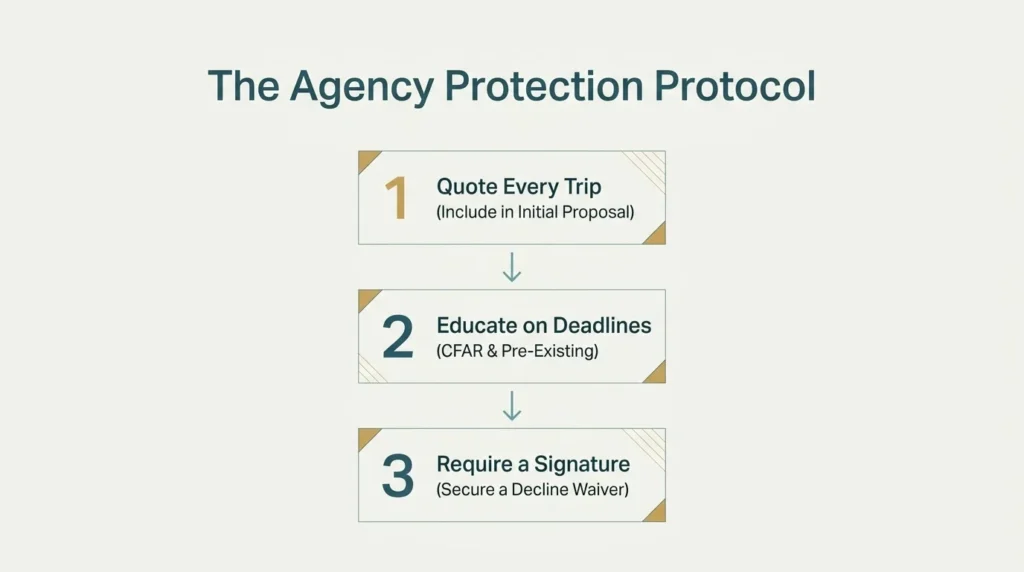
💡 TARC Tip: CFAR policies are highly time-sensitive. They typically must be purchased within 10 to 14 days of the client’s initial trip deposit, and the cancellation must usually occur at least 48 hours prior to departure. Always verify these strict deadlines with your preferred supplier.
5. Pre-Existing Medical Conditions
A common misconception is that travelers with chronic illnesses cannot be insured.
Depending on the supplier, your client’s trip can be fully covered even if a pre-existing medical condition forces them to cancel. However, just like CFAR, the Pre-Existing Condition Waiver is incredibly time-bound. It must almost always be purchased within the first 14 days of making the initial trip deposit.
6. Navigating Force Majeure
While it may be a difficult term to pronounce, “Force Majeure” is a critical clause in the travel industry.
This clause dictates coverage during extraordinary, unavoidable events such as natural disasters (hurricanes, earthquakes), severe political unrest, acts of terrorism, or global pandemics. While some basic policies exclude these massive events, premium travel protection plans are specifically designed to cover your clients when the unimaginable happens.
7. It Is More Affordable Than They Think
When looking at the final price tag of a luxury itinerary, clients often assume insurance will break the budget. In reality, travel protection is usually only a small fraction of the overall trip cost.
Your clients already pay to insure their homes, their cars, and their health. Gently reminding them that their $15,000 vacation is a major financial asset that deserves the exact same level of protection often quickly shifts their perspective.

Beyond the Basics: High-End Supplier Perks
Still not convinced? When selling travel protection, be sure to highlight these premium supplier benefits:
- Global Travel Apps: Leading insurance suppliers now offer dedicated mobile apps providing 24/7 customer service, direct links to vetted local hospitals, first-aid dictionaries, and seamless digital claim filing.
- Work-Related Cancellations: Did your client’s CEO just schedule an emergency merger meeting? Some elite policies provide full refunds for work-related cancellations, corporate relocations, or even legal separations.
- Lost or Stolen Documents: If a passport or visa is stolen abroad, the right policy will cover the exorbitant replacement costs and logistical expenses associated with securing new documentation.
Your Agency Liability Protocol
We know some clients will argue that their premium credit card offers adequate protection. While credit cards do offer some baseline coverage, they typically require travelers to jump through massive bureaucratic hoops and often enforce strict monetary caps.
If a client remains adamant about declining coverage, you must protect your business.
Make it a non-negotiable standard practice to quote travel protection to every single client, on every single trip. If they refuse, you must require them to sign a formal Travel Protection Decline Waiver. You never want to find yourself in a situation where a devastated client accuses you of failing to offer them a safety net.
⚠️ Please Note: You are a Travel Advisor, not a licensed Insurance Agent. While you can offer protection and provide the policy details, you must never interpret the policy, guarantee claim payouts, or advise on specific legal coverages. If a client has highly specific questions, always direct them to call the insurance company’s dedicated claims specialist directly.
Looking for the perfect insurance partner for your agency? Explore our Supplier Directory for a curated list of trusted, top-tier travel protection providers designed to keep your clients safe and your business thriving.