Hosting and attending industry events are two of the most powerful, high-converting methods to increase your agency’s revenue exponentially.
However, showing up to a mixer and simply handing out business cards is not enough to capture high-ticket clients. Whether you are walking the floor at an industry conference or hosting an exclusive client appreciation night, you must have a targeted travel agency event strategy formulated long before you ever step foot in the room.
Operating without a structured plan often leads to wasted marketing budgets and missed opportunities. By treating every event as a deliberate stage in your sales funnel, you can seamlessly tap into new networks, elevate your brand visibility, and capture highly qualified luxury leads.
The Dual Approach: Hosting vs. Attending
Before drafting your strategy, you must clearly define your role at the event, as this dictates your overarching objective.
Hosting or Sponsoring an Event: This means you are either organizing a proprietary event (like a luxury cruise night) or sponsoring a booth at an existing community gathering (like a bridal expo or high-end charity gala). This avenue requires a financial investment but provides ultimate brand visibility. It allows you to position yourself as an authority, tap into external databases, and create an immersive environment designed specifically to capture new leads.
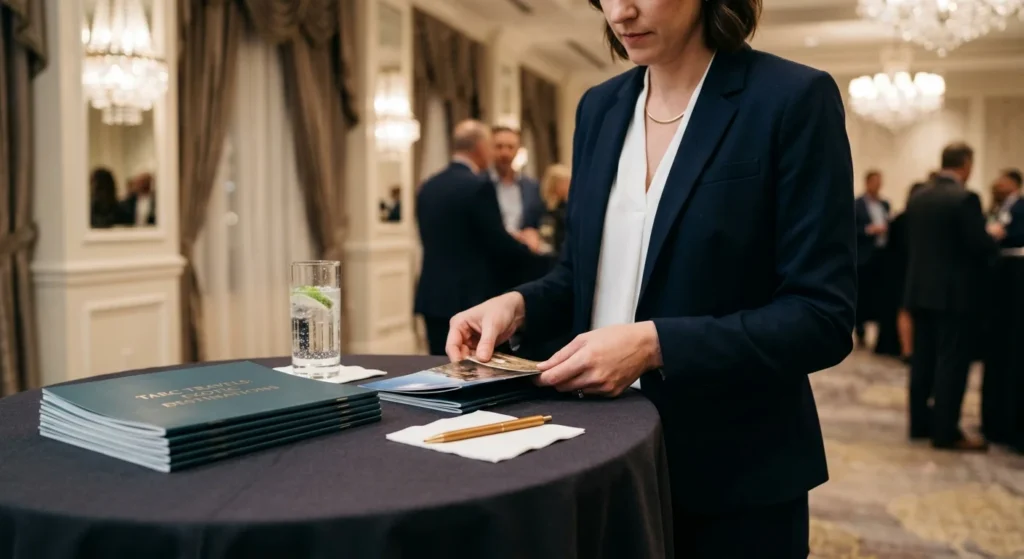
Attending an Event: This involves participating in social gatherings, local Chamber of Commerce mixers, or travel industry conferences. While your financial overhead is lower, your strategy must rely heavily on your personal networking skills, your elevator pitch, and your ability to transition casual conversations into formal consultation bookings.
💡 TARC Tip: The fortune is in the follow-up. A pile of new business cards is useless if they sit on your desk for a week. Your event strategy must include a dedicated block of time the very next morning to enter those contacts into your CRM and send a personalized follow-up email.
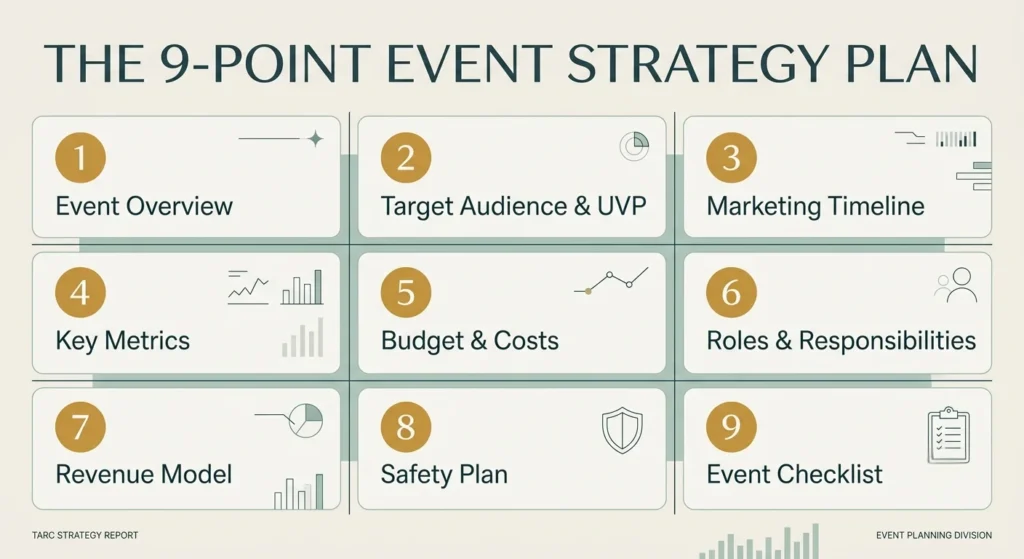
The 9 Pillars of an Event Strategy Marketing Plan
What does a professional event strategy actually look like? It is a meticulously documented plan that outlines exactly how you will execute the event and measure its success.
For every single event you commit to, you should draft a specific marketing plan encompassing these 9 critical elements:
- Event Overview: Define the basic logistics. Clearly state the Event Name, Date, Location, your overarching Purpose for being there, and the specific Need this event fulfills for your business.
- Audience & Unique Value Proposition (UVP): Who exactly is attending this event? What specific, irresistible value or solution are you offering to this exact demographic?
- Marketing Ideas & Timeline: How are you promoting your attendance? Map out a chronological timeline for your social media posts, email blasts, and pre-event outreach.
- Key Metrics (KPIs): How will you measure success? Define your goals in hard numbers (e.g., “capture 25 new email leads,” “book 3 initial consultations,” or “distribute 50 welcome guides”).
- Budgets & Costs: Track every penny. Include the cost of booth registration, marketing collateral printing, travel expenses, and any promotional giveaways.
- Roles & Responsibilities: If you are bringing a team member or a Back-Up Buddy, clearly define who is responsible for managing the booth, collecting leads, and engaging with attendees.
- Revenue Model: How will this event generate income? Will you be charging an entry fee, or are you relying entirely on post-event bookings to cover your initial investment?
- Safety Plan: Establish a basic protocol for physical safety, crowd management, and data protection (ensuring any digital lead-capture tablets are secure).
- Event Checklist: Create a master packing list. This ensures you never arrive at a venue missing crucial items like your branded tablecloth, extra business cards, iPad chargers, or sign-up sheets.
Execute With Intention
By treating your networking and hosting opportunities with this level of strategic rigor, you elevate your business from a casual hobbyist to a premium travel enterprise. Stop leaving your lead generation up to chance. Draft your travel agency event strategy today, and start turning local handshakes into high-ticket global itineraries.