
Running a successful travel agency requires far more than passion for world travel—it demands operational discipline, clear goal setting, and structured performance tracking. In a fast-paced, constantly evolving industry, staying on top of long-term strategic goals can easily take a back seat to daily administrative fires.
Developing a formal travel agent accountability plan is one of the most effective steps you can take to bridge the gap between high-level ambition and consistent, daily execution. Whether you operate as an independent solo advisor or lead a growing team of ICs, a structured framework ensures your agency stays focused, resilient, and profitable.
💡 TARC Tip: Accountability is not about micromanagement; it is about establishing clarity. When every objective has a measurable outcome and a clear owner, agency productivity increases exponentially.
Why Every Agency Needs an Accountability Framework
Operating without a structured tracking system leaves your business vulnerable to drift. A robust travel agent accountability plan transforms abstract business goals into actionable, predictable routines.
Key Benefits for Travel Advisors
- Elevated Daily Productivity: Clear milestones eliminate guesswork. Every team member understands their exact priorities and how their daily output directly drives the agency’s overarching targets.
- Data-Driven Decision-Making: Structured progress tracking provides real-time visibility into what is working. This allows you to allocate marketing budgets, invest in host agency resources, or adjust service offerings with confidence.
- Enhanced Operational Transparency: Regular review cycles build an open culture of communication, ensuring operational bottlenecks are identified and solved before they impact your clients.
4 Steps to Build Your Agency Accountability Plan
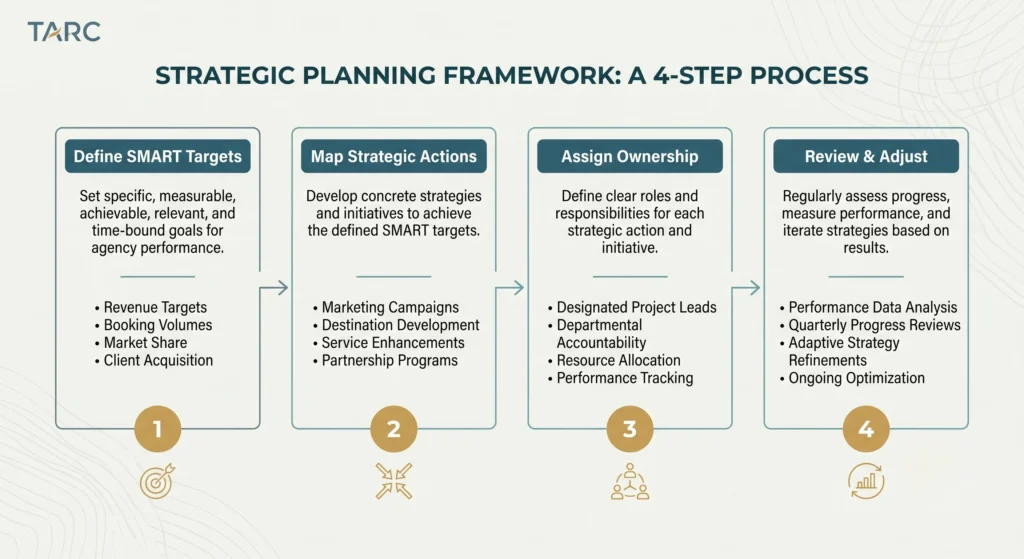
Implementing an effective performance system does not need to be overly complex. Follow these four foundational steps to build a framework tailored to your travel business:
┌─────────────────────────────────────────────────────────┐
│              STEP 1: DEFINE SMART GOALS                 │
│    Establish specific, time-bound agency metrics        │
└────────────────────────────┬────────────────────────────┘
                             │
                             ▼
┌─────────────────────────────────────────────────────────┐
│            STEP 2: MAP KEY MILESTONES                   │
│    Break high-level targets into strategic actions       │
└────────────────────────────┬────────────────────────────┘
                             │
                             ▼
┌─────────────────────────────────────────────────────────┐
│         STEP 3: ASSIGN ROLES & DEADLINES                │
│    Establish clear ownership and task accountability    │
└────────────────────────────┬────────────────────────────┘
                             │
                             ▼
┌─────────────────────────────────────────────────────────┐
│          STEP 4: SCHEDULE PROGRESS REVIEWS              │
│    Conduct routine audits to adjust and maintain momentum│
└─────────────────────────────────────────────────────────┘
Step 1: Define Your SMART Goals
Start by establishing exact objectives for the next one, three, and five years. Avoid vague intentions like “grow my sales.” Instead, utilize the SMART framework to make your goals Specific, Measurable, Achievable, Relevant, and Time-based.
- Example: “Increase gross booking volume by 25% within the next 12 months by specializing in luxury European river cruises.”
Step 2: Identify Key Actions and Strategic Milestones
Break your primary goals down into core operational drivers. If your objective is to expand sales by 25%, identify the exact levers required to reach that target:
- Launching a targeted lead-generation campaign for high-net-worth clients.
- Forming preferred supplier partnerships with luxury land operators.
- Improving client retention rates through structured post-trip follow-up workflows.
⚠️ Please Note: Attempting to execute too many new initiatives simultaneously leads to execution fatigue. Focus on 2 to 3 high-impact strategic actions per quarter to maintain high quality.
Step 3: Assign Clear Ownership and Enforceable Deadlines
An action item without a dedicated owner and deadline is merely a suggestion. Assign explicit responsibility for every milestone, whether to yourself, an associate advisor, or a virtual assistant. Ensure every task has a fixed completion date on your master agency calendar.
Step 4: Institute Regular Review and Monitoring Cycles
Accountability relies on consistent follow-through. Schedule recurring review sessions—weekly for individual tasks, monthly for agency metrics, and quarterly for overarching strategy. Use these touchpoints to celebrate wins, analyze missed targets, and adjust your tactics to match market conditions.
Elevate Your Agency Execution
Building a sustainable, high-performing travel business is an ongoing process. By establishing a clear travel agent accountability plan, you transition from passively reacting to client requests to proactively driving your agency’s revenue and market presence.
Ready to Scale Your Travel Business?
Taking control of your agency’s performance begins with the right strategic support and industry resources.
Ready to streamline your systems and hit your growth targets? Join the Travel Advisor Resource Center (TARC) community today to access our library of agency planning templates, workflow blueprints, and peer accountability networks designed to take your travel business to the next level.